About Time & Tide Bells
One of the unique features of this project is the period over which it has been sustained. Marcus started research on the design of the bell, to create a shape that would be rich in harmonics, in 2008.
The first installation was in Appledore, Devon in the next year, and they followed every year or two for the next decade. As the project grew and evolved, its richness became ever clearer; above all, its potential to act as the focus, the crucible or springboard, for further creative activity, be it artistic, educational, and more.
The Bells have a unique position as public artworks. They are not commissions; no individual, developer, local authority or other institution has paid the artist to make them for particular locations. Although a number of copies have been and will continue to be made, they are not in the conventional sense an ‘edition’, let alone are they numbered. They offer very limited recognition for the artist; they are not vehicles for an ego.
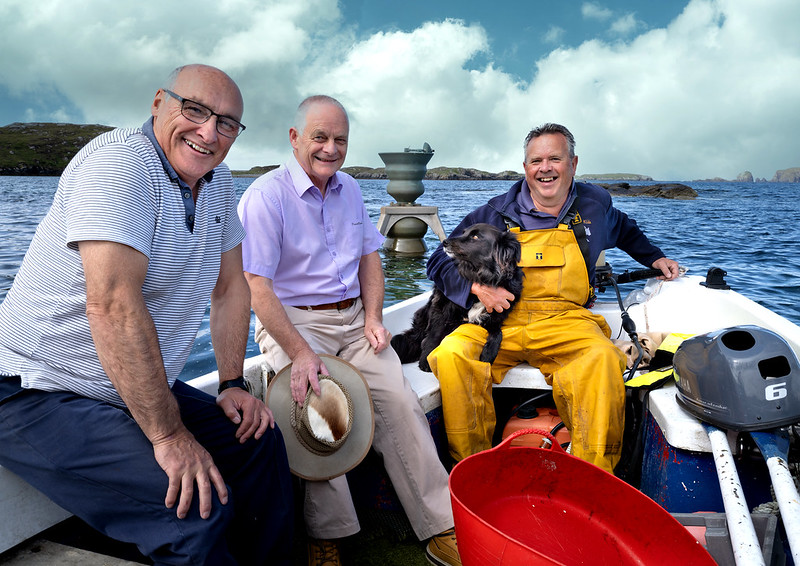
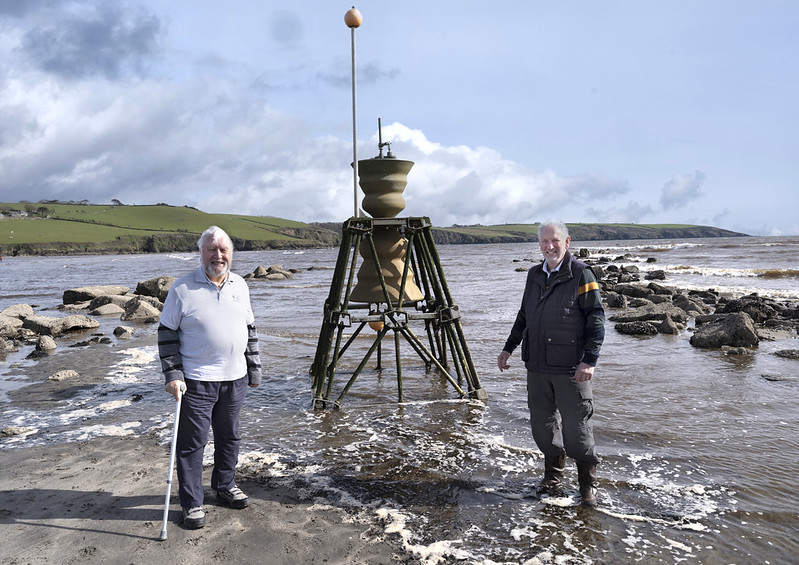
What they are is a gift to the host community, and owned, in every sense, by them. A gift both literal and metaphorical; to date the funding structure has covered the cost of their casting ‘centrally’; and completely free rein has been given to communities in the form of their mounting, their naming, and the inscriptions they bear. All installations have come about because by one means or another – often by visiting an existing bell – potential hosts have embarked on the very substantial labour of getting a bell installed.
Funding for early bells came in part from the Arts Council, but very largely from private funds raised by Marcus. In 2018 a grant was provided from the National Lottery Community Fund.
Marcus Vergette's concept
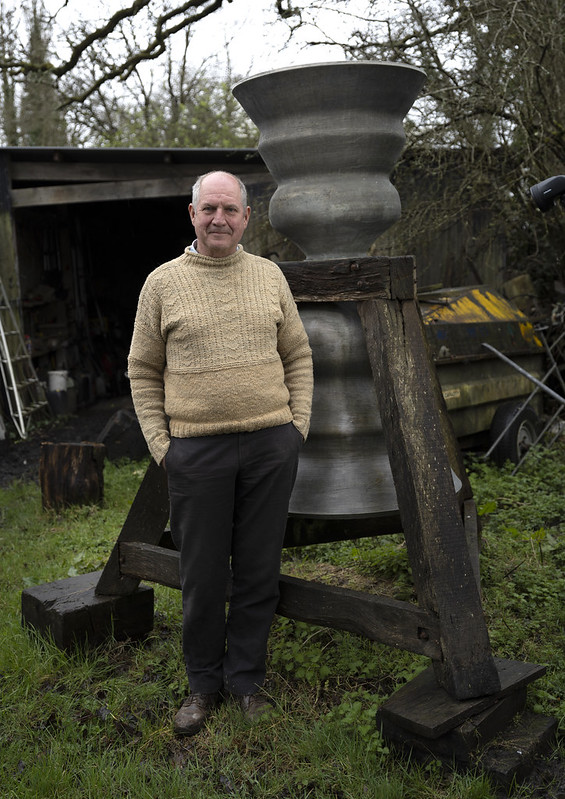
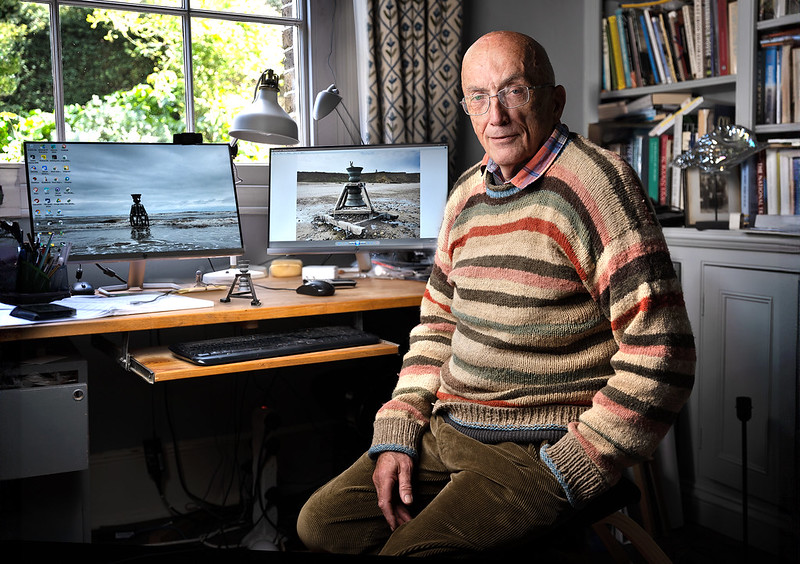
Marcus Vergette, creator of the Time and Tide bells, is a sculptor. During the Foot and Mouth epidemic of 2001 he and his wife were quarantined for six months on their remote Devon farm. When their isolation came to an end, he was summoned by a neighbour to the parish church.
The bells were ringing to celebrate. He watched the bells bringing all his rural community together. ‘I saw that bell and I just thought: here it is, it's obvious. A communication device. One that goes through time. And lakes on multiple meanings: it's the same bell that rings for weddings or a funeral. Or to sound a warning.’
The idea of a tidal bell, and the complexity of the sound as the tide ran in and out resonated with his ideas of the give and take of climate change. Discussing it with Sandy Brown in Appledore, she said, ‘let's go for it.’ That first bell was a success. Next, he contacted a friend on the isle of Lewis in the Hebrides, ‘to top and tail the country’. They immediately started talking about ‘our bell’. They're so self- sufficient, it just happened.’
Bell People